


Gator Maxx Sand Polymeric Sand: Overlay and 2 in Joint Guide
How Alliance Gator Maxx Sand polymeric sand works on traditional bases and overlays over concrete: 1/8 in to 2 in joints, drainage rules, install steps, coverage per bag and warranty.

Choose your location
Delivery estimates depend on where we ship. We ship from Williamstown, New Jersey to all 50 US states.
Sign in to use your saved addressesLoading your cart
Step-by-step polymeric sand, paver sealing, cleaning, base and winter guides, built from the manufacturers' data sheets for the products we stock.
 Polymeric sand
 Haze & cleaning
 Base & installation
 Adhesives & repairs
Choosing, installing and fixing polymeric joint sand.
 Polymeric sand
Gator Maxx Sand Polymeric Sand: Overlay and 2 in Joint Guide
Polymeric sand
Gator Maxx Sand Polymeric Sand: Overlay and 2 in Joint Guide
 Polymeric sand
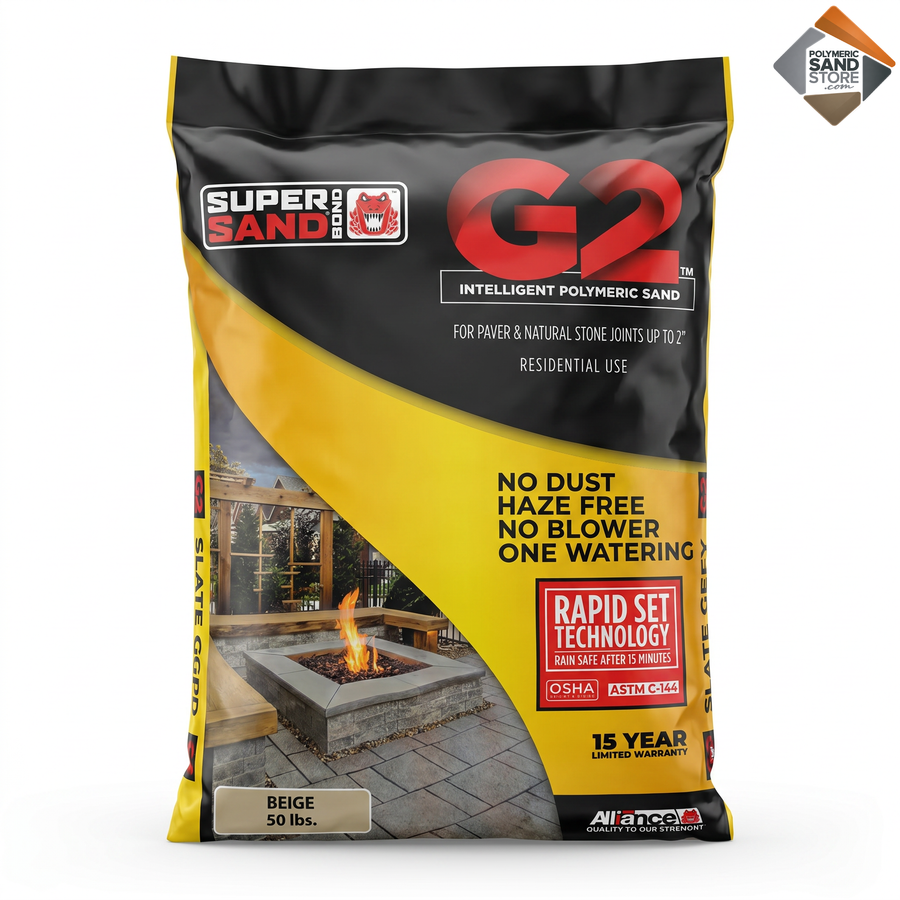
Gator Super Sand G2 Polymeric Sand: Rapid Set Install Guide
Polymeric sand
Gator Super Sand G2 Polymeric Sand: Rapid Set Install Guide
 Polymeric sand
Gator Super Sand Bond Polymeric Sand: Tight Joint Install Guide
Polymeric sand
Gator Super Sand Bond Polymeric Sand: Tight Joint Install Guide
 Polymeric sand
Gator Maxx G2 Polymeric Sand: Wide Joint Install Guide to 4 in
Polymeric sand
Gator Maxx G2 Polymeric Sand: Wide Joint Install Guide to 4 in
White haze, efflorescence and everyday paver cleaning.
 Haze & cleaning
Haze Free Polymeric Sand: What Causes White Haze on Pavers
Haze & cleaning
Haze Free Polymeric Sand: What Causes White Haze on Pavers
 Haze & cleaning
Polymeric Sand Installation Mistakes That Cause Haze and Cracks
Haze & cleaning
Polymeric Sand Installation Mistakes That Cause Haze and Cracks
 Haze & cleaning
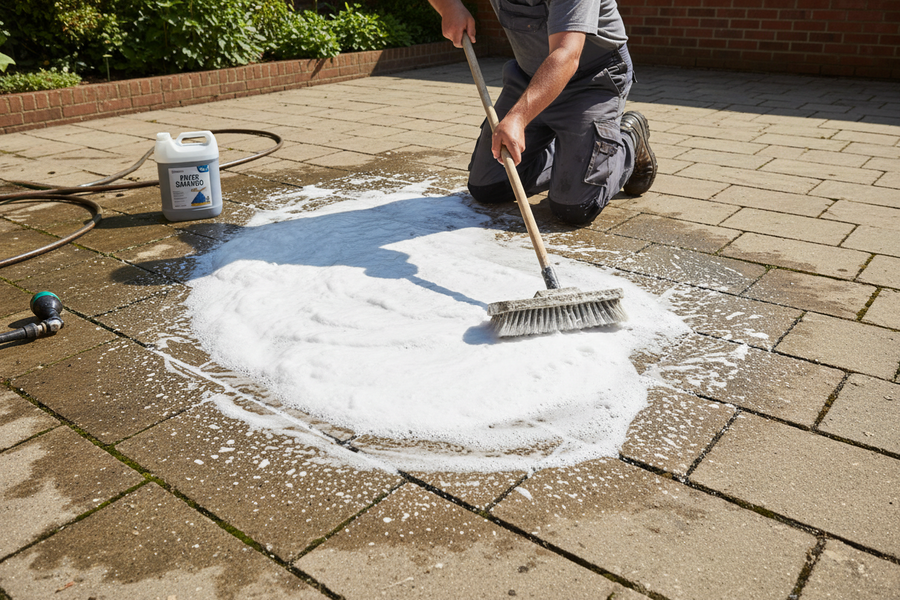
How to Remove Polymeric Sand Haze From Pavers, Step by Step
Haze & cleaning
How to Remove Polymeric Sand Haze From Pavers, Step by Step
 Haze & cleaning
How to Get Polymeric Sand Off Pavers and Remove the Haze
Haze & cleaning
How to Get Polymeric Sand Off Pavers and Remove the Haze
Base, bedding sand and getting the install right.
Base & installation
Gator Super Sand G2 Polymeric Sand: Rapid Set Install Guide
Base & installation
Gator Super Sand Bond Polymeric Sand: Tight Joint Install Guide
Base & installation
Gator Maxx G2 Polymeric Sand: Wide Joint Install Guide to 4 in
Base & installation
Polymeric Sand Installation Mistakes That Cause Haze and Cracks
Gluing caps and stone, filling cracks, porcelain joints.
Paver and polymeric sand how-to guides from the Polymeric Sand Store team. Every guide is built from the manufacturers’ technical data sheets for the products we stock from Alliance Gator, Techniseal, SEK Surebond, SRW Products, Rhino and ROMEX, so the joint widths, coverage, cure and rain-safe times you read match the bag you buy.
Start with how to choose polymeric sand, check polymeric sand coverage per bag or run the polymeric sand calculator, and plan around the weather with rain after polymeric sand. For sealing, read how to seal pavers and wet look vs natural look paver sealer. Data sheets for every product are in our TDS and SDS library.
Short clips from real installs. Click to play.
All guides
Every guide we have published, newest first.
How Alliance Gator Maxx Sand polymeric sand works on traditional bases and overlays over concrete: 1/8 in to 2 in joints, drainage rules, install steps, coverage per bag and warranty.

How Alliance Gator Super Sand G2 rapid set polymeric sand handles paver joints from 1/8 in to 2 in: specs, approved surfaces, the 30-30 single watering, coverage per bag and...

How Alliance Gator Super Sand Bond polymeric sand handles paver joints from 1/8 in to 1 in: specs, approved surfaces, the three-pass watering method, coverage per bag and warranty.

How Alliance Gator Maxx G2 polymeric sand handles paver and natural stone joints up to 4 in: specs, where it can and cannot go, install steps, coverage per bag and...

Most polymeric sands stop at 1 inch or less. Compare the products rated for wide joints up to 6 inches, their minimum depths, overlay limits and flagstone guidance, and see...

Flagstone joints are wide and irregular, so pick a polymeric sand whose data sheet rates it for natural stone, your widest joint and your base. Compare joint widths, compaction and...

Replacing polymeric sand means removing the old joint material to full depth, drying the pavers completely, then installing, compacting and activating new sand exactly as its data sheet describes before...

A reference chart of polymeric sand coverage per bag, product by product and joint width by joint width, taken from manufacturer data sheets, plus how to measure your area and...

Rain-safe times for polymeric sand range from 15 minutes to 24 hours depending on the product. Compare the windows each manufacturer publishes, learn how to plan around the forecast, and...

Minimum application temperatures for polymeric sand range from above 32°F to above 59°F, and many must hold for 48 hours. Compare each product's published limits, humidity notes and the hot...

White haze on pavers comes from polymeric sand residue left on the surface. Here is what haze free labels mean, how to prevent haze during installation, and how to remove...

Brick sand is made for mortar and stays loose in paver joints, while polymeric sand sets after watering. We compare the two, cover joint stabilizing sealers, and explain how to...