



How much StickyStone do you need?
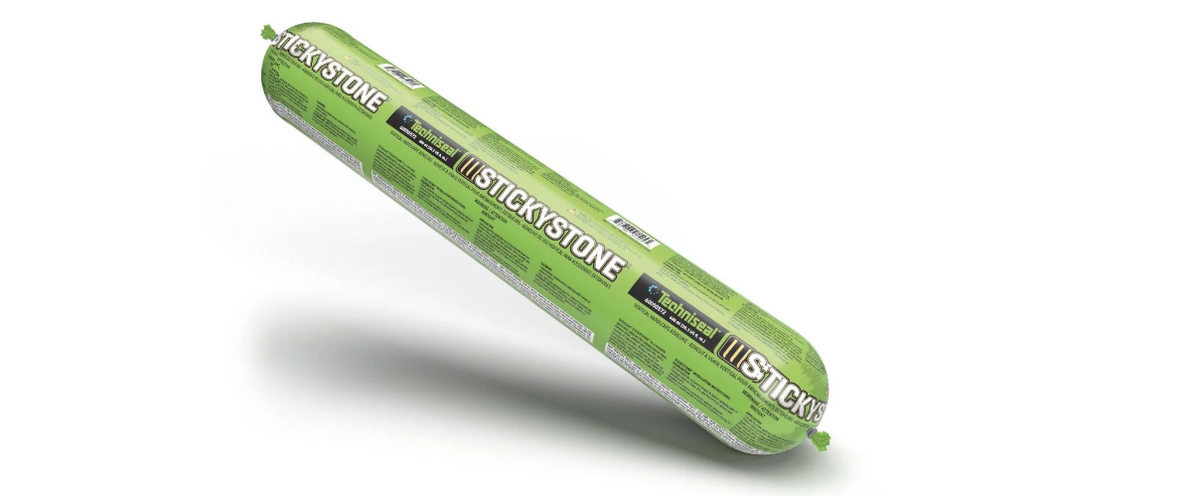
Techniseal STICKYSTONE is an air cured hardscape construction adhesive, and how far one sausage goes has very little to do with your square footage. It is set by two things: how many linear feet of adhesive bead the job needs, and how thick that bead has to be. The calculator above works from both, so the count it gives you is the count you actually have to buy.
Why the calculator asks for length and height
Enter the length and height of the wall, cap run or veneer area and the calculator converts that into linear feet of bead, using beads run every 3 in on center as specified in the Techniseal technical data sheet. A 20 ft wall standing 6 ft high is 120 square feet, but at 3 in bead spacing it swallows far more adhesive than a 120 square foot single course cap run. Square footage on its own cannot tell you that, which is why generic adhesive coverage numbers miss so badly.
StickyStone coverage by bead size
Bead size is the single biggest factor in how much StickyStone adhesive you use. Moving from a 1/4 in bead to a 3/4 in bead cuts coverage by more than 80 percent, because a bead is a cylinder and its volume climbs with the square of its diameter.
| Bead size | Metric | Linear ft per sausage | Linear ft per tube |
|---|---|---|---|
| 1/4 in x 1/4 in | 5 mm x 5 mm | 50 | 25 |
| 5/16 in x 1/4 in | 8 mm x 6 mm | 40 | 20 |
| 3/8 in x 5/16 in | 10 mm x 8 mm | 26 | 13 |
| 1/2 in x 3/8 in | 15 mm x 10 mm | 16 | 8 |
| 3/4 in x 1/2 in | 20 mm x 12 mm | 8 | 4 |
| 1 in x 1/2 in | 25 mm x 15 mm | 6 | 3 |
| 1-1/4 in x 1/2 in | 30 mm x 15 mm | 5 | 2 |
Match the bead to the gap you actually have. A flat wall cap sitting on a level block wall takes a small bead. Rough cleft natural stone with an uneven bed needs a larger one to make full contact across the joint.
Sausages or tubes?
StickyStone is sold in a sausage and in a cartridge tube. One sausage covers exactly twice what one tube covers at every bead size, so on any job of real size the sausage is the cheaper way to buy adhesive. Sausages need a sausage gun rather than a standard caulk gun, so if you do not already own one, add the StickyStone sausage gun to your order.
Heavy stone needs double the adhesive
For materials over 15 lb per square foot Techniseal recommends applying additional, doubled beads. Set the material weight in Step 3 and the calculator doubles the bead count for you automatically. Thick natural stone caps and full thickness veneer regularly cross that line, so weigh a piece before you order rather than after.
What StickyStone bonds to
Techniseal lists substrates including brick, concrete block, cement board, wood, pressure treated wood and plywood, and veneer materials including natural stone, manufactured stone, decorative stone, outdoor porcelain tile, outdoor glass, composites and concrete pavers. In practice that covers wall caps and coping, column caps, steps and risers, stacked stone veneer, seat walls, outdoor kitchens and fire pit surrounds. Roughen non porous surfaces first and run a field adhesion test on your actual materials before gluing the whole job. Full substrate lists and cure data are on our technical data sheets and SDS page.
Order about 10 percent extra
The recommended figure already carries 10 percent over the raw calculation to cover waste, overlap, the material left sitting in the nozzle and the bead you end up running twice because a stone did not seat right. Ordering to the bare minimum is how a job stops halfway up a wall on a Saturday afternoon.
Always confirm against the current Techniseal technical data sheet for your product. The coverage figures above come from the published bead chart and assume beads at 3 in on center. Substrate texture, stone flatness and site conditions all move real world usage.